


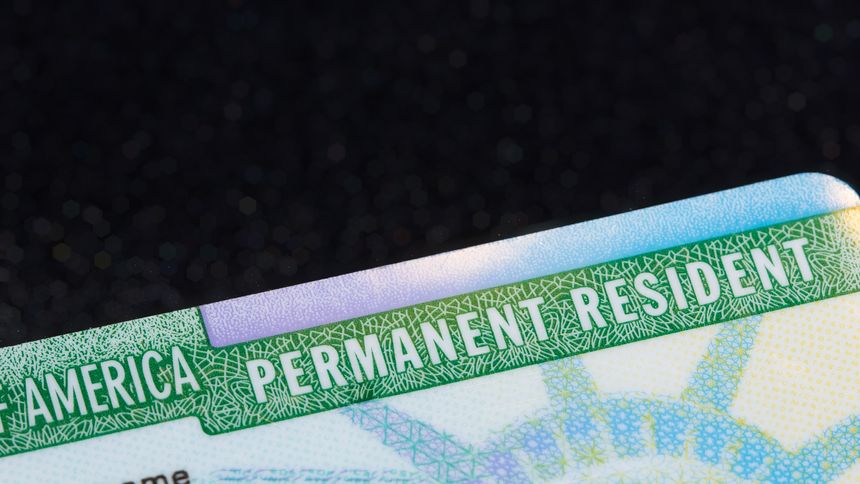
For decades, foreign nationals working in the United States on temporary visas (H-1B workers, L-1 intracompany transferees, F-1 students) have had the option to apply for permanent residency without ever leaving the country. That process, known as adjustment of status (AOS), has been a cornerstone of the U.S. legal immigration system since 1952, repeatedly expanded by Congress to accommodate the realities of a global workforce.
That pathway is now under direct assault. Even the administration can't seem to agree on what it just did.
What Happened
Late last week, USCIS issued a policy memorandum reclassifying adjustment of status as "extraordinary" relief, instructing adjudicators to favor consular processing abroad for most applicants. The announcement triggered immediate alarm: about 1.4 million green cards were granted in 2024, with roughly 820,000 approved through adjustment of status. That means the majority of green card holders each year complete the process while living and working in the United States. Critically, the memo's reach extends across every immigration category. Employment-based, family-based, and investment-based (EB-5) immigrants are all affected.
The backlash was swift. Business groups, immigration attorneys, and tech employers pushed back hard, and by the weekend the administration was in retreat. DHS sought to clarify that it was not a blanket change and that individual immigration officers would decide case by case. DHS characterized the memo as simply "a reminder to officers of their discretionary authority, which has always existed."
But the walk-back created as much confusion as it resolved. Some immigration lawyers reported their clients were already being asked by USCIS officers in live interviews why they were applying for green cards in the United States, and whether any factors prevented them from applying in their home countries. Even some inside the Department of Homeland Security were confused as to the scope of the change when it was publicized.
The Legal Problem
The administration's claim that consular processing was always the intended default runs into a significant problem: Congress repeatedly said otherwise. Lawmakers first authorized adjustment of status in 1952 and amended the law multiple times since. Those updates include a 1990 reauthorization explicitly allowing H-1B and L-1 holders to pursue permanent residency without affecting their temporary status, provisions permitting H-1B workers to switch employers while pursuing a green card, and a rule granting adjustment eligibility even with up to 180 days of status violations for employment-based applicants.
Legal challenges are forming. The memo's critics argue it effectuates a broad policy shift through internal guidance rather than notice-and-comment rulemaking, mischaracterizes the case law it cites as authority, and disrupts settled reliance interests for both individuals and the institutions that have structured their talent pipelines around established adjustment pathways. As of this writing, no formal legal challenges have been filed — but business organizations, healthcare systems, universities, and the EB-5 investment community are among those preparing to act.
What It Means for Corporate Mobility
For companies managing international talent pipelines, the ambiguity itself is the problem. The damage may already be underway.
The stakes of being pushed to consular processing are higher than they may initially appear. Consular officers have broad discretion to reject applications, their decisions generally cannot be appealed, and applicants typically cannot have a lawyer present for interviews. Once the foreign national departs the United States, it is very difficult to predict when, or if, they will be able to return. That's a fundamentally different risk profile than domestic AOS processing, even for employees who have done everything right. This could create disruption to initiatives and projects within companies who may have key talent in this situation of being parked back in the origin country.
The guidance also left open whether people from the scores of countries for which immigrant visa processing has been paused would have to return to apply for green cards, and what would qualify someone for a "national interest" exemption. For mobility teams managing globally diverse talent populations, that uncertainty alone is operationally unmanageable.
The chilling effect extends beyond employees already in the pipeline. Interest from foreign job-seekers in U.S. positions has already fallen sharply, according to data from the hiring platform Indeed. The policy doesn't just complicate existing mobility programs, it undermines the talent attraction proposition entirely.
What to Do Now
The first move is to connect with your expatriate immigration partners and get their read on your specific exposure. Courts may ultimately restore the status quo, but mobility programs can't operate on that assumption. The immediate priorities would seem to be: audit your foreign national population for pending I-485 filings; work with immigration counsel to assess each employee's individual risk profile and visa category; map consular posts with the shortest current appointment queues for employees who may need to process abroad; and begin budgeting for extended cross-border payroll and tax compliance. For employees who haven't yet filed for adjustment, accelerating PERM labor-certification timelines may be critical before the window narrows further. Employers should also think proactively about internal communications. That means acknowledging the uncertainty, reinforcing what is known, and reducing unnecessary panic among affected employees while the situation continues to evolve.
The administration may be scrambling to soften the optics. But the memo's simplest effect may be its most damaging. It scares people away from pursuing permanent residency in the United States at all, and for companies competing globally for talent, that costs them the candidates before the legal fight is even resolved.
/Passle/56686a093d94740bd0dda608/SearchServiceImages/2026-10-13-17-32-29-094-6ace6b2d477453bcaa2f0248.jpg)
/Passle/56686a093d94740bd0dda608/SearchServiceImages/2026-09-28-14-19-05-543-6aba775957009c2a3813850c.jpg)
/Passle/56686a093d94740bd0dda608/SearchServiceImages/2026-10-05-19-37-55-698-6ac3fc939419104bcb84c3ed.jpg)