This is the latest in our ongoing series tracking the 21st Century ROAD to Housing Act. Previous posts are linked below.
When we last wrote, the 21st Century ROAD to Housing Act had just become law without an explicit carve-out for corporate relocation home sale programs, and the fight had moved to Treasury. On October 23, Treasury published its first proposed rule implementing Section 1001. For the relocation industry, it contains the most encouraging development since the bill passed, and it comes with a deadline.
What Treasury Proposed
The proposed rule does not name relocation or home sale programs. The potential protection comes through proposed § 36.15, which clarifies when an entity is considered “in the business of” holding single-family homes. Under the proposal, an entity is not in that business if it holds homes solely on a temporary and incidental basis in furtherance of a different bona fide business, only to the extent reasonably necessary for that business, and not as a regular or continuing investment strategy or portfolio management activity.
That language matters because it describes how relocation home sale programs work. An employer or its relocation management company temporarily takes title to an employee’s home to facilitate a move, then sells it to a new owner-occupant. WERC has welcomed the proposal and notes that these programs support roughly 50,000 American workers each year.
Why This Is Not Yet a Safe Harbor
Treasury has provided a path, but not a guarantee. The test depends on facts and circumstances, and the proposal does not tie “temporary” to a specific holding period. The rule also describes the business of holding homes broadly, including holding for “any other type of income or financial gain,” which is why the “different bona fide business” language is so important. Treasury has also said it expects further rulemakings, so this is the first phase of a longer process.
Nothing changes for your program today. BVO, AVO, and GBO programs continue to operate normally. The restrictions take effect January 7, 2027, and the final rule will determine how they apply.
WERC’s Call to Action: Submit a Public Comment
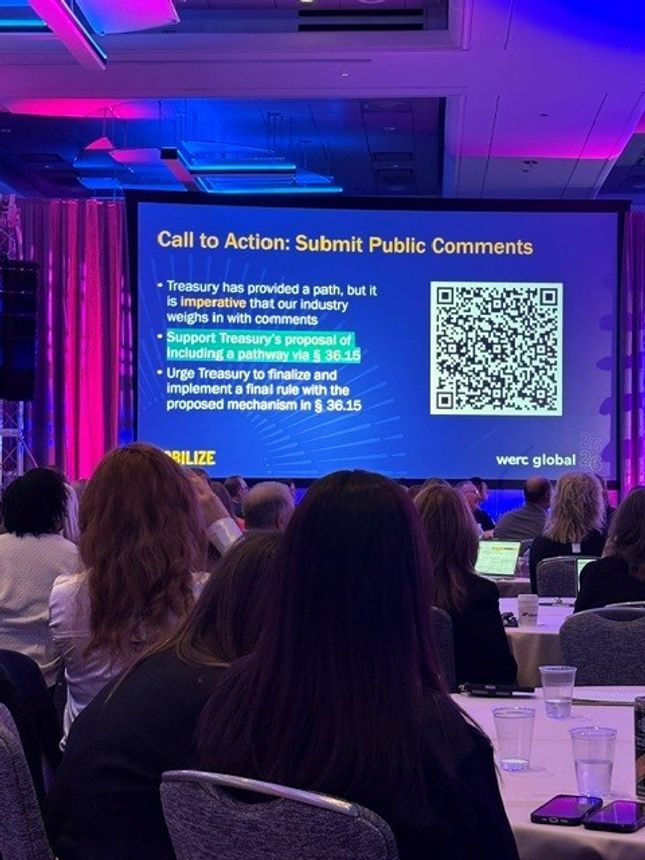
At WERC Global this week, WERC opened with a call to action on public comments. Its message: Treasury has provided a path, but it is imperative that the industry weighs in. WERC is asking practitioners to support Treasury’s proposal of including a pathway via § 36.15, and to urge Treasury to finalize and implement a final rule with the proposed mechanism in § 36.15.
Public comments become part of the official record Treasury considers. When employers, relocation management companies, and service partners describe in their own words how these programs work and why they matter, it gives Treasury concrete support for keeping this language in the final rule. WERC plans to file its own comments, and individual company comments strengthen that effort.
How to Submit a Comment
Comments are due by November 23, 2026.
- Online (preferred): Go to the proposed rule on the Federal Register and use the “Submit a public comment” button, or file directly on Regulations.gov under docket TREAS-DO-2026-0529. Typed comments are limited to 5,000 characters, but you can attach a longer letter as a file.
- By mail: U.S. Department of the Treasury, Attention: Office of Capital Markets, 1500 Pennsylvania Avenue NW, Washington, DC 20220. Treasury strongly encourages online submission because of mail delays.
- Caption: Use “Restrictions on Large Institutional Investor Purchases of Single-Family Homes.”
- Include: your name, organizational affiliation, address, email address, and telephone number.
- Keep in mind: Comments are public. Do not include confidential business information.
What Makes a Comment Effective
Short, specific comments tend to carry the most weight. Consider covering these points:
- Support Treasury’s proposed pathway via § 36.15 and urge Treasury to keep the proposed mechanism in the final rule.
- Explain how your program works: the employer or RMC acquires the home temporarily, solely to facilitate an employee’s move, and sells it to an owner-occupant.
- Share relevant facts, such as typical time in inventory, the number of employees who use home sale programs, and the markets involved.
- Ask Treasury to confirm that employer-sponsored relocation home sale programs fall within the temporary and incidental holding provision.
Check WERC’s Home Sale Programs page for the latest resources, and read WERC’s statement on the proposed rule. Mobility teams should also loop in their government affairs colleagues and legal counsel before filing.
What Comes Next
After the comment period closes, Treasury will review submissions and work toward a final rule ahead of the January 7, 2027 effective date. Plus Relocation will keep tracking each step and keep clients informed. If you would like help thinking through how your program fits the proposed language, reach out to your Plus advisor.
Resources