


Before the World Cup gets started, jump in and get your updates! We are only a couple of days from things kicking off so grab your vuvuzela! The 2026 World Cup will launch with a series of historic opening ceremonies across North America, marking the first time the tournament has been launched simultaneously in three host countries. Who are you picking to win this year?
A total of 16 cities are serving as official venues for the 2026 games, across the three host countries: Atlanta, Boston, Dallas, Houston, Kansas City, Los Angeles, Miami, New York/New Jersey, Philadelphia, San Francisco, Seattle, Guadalajara, Mexico City, Monterrey, Toronto and Vancouver!
Over the next month plus, expect dramatically increased costs for furnished corporate housing and hotels, along with additional high travel-related expenses. While this event occurs in the midst of what we would call moving's peak season, most of our other partners from household goods to destination services and realtors are expecting to be able to navigate and provide their critical services for mobile employees. You may want to rethink relocation timing, postpone home finding tours, and set expectations of possible disruptions.
Let the games begin…but let's first catch up on some of the other happenings impacting global mobility programs:
United States
- H-1B visa update: A federal judge vacated President Trump’s policy of charging $100,000 for an H-1B visa.
India EB-5: The EB-5 Unreserved immigrant visa category for India is immediately unavailable and will remain so through the remainder of fiscal year 2026, which ends September 30, 2026. USCIS should nevertheless continue to accept India EB-5 Unreserved adjustment of status filings that are current in the Visa Bulletin for June, as the agency has done in prior years.
- USCIS and green cards: For decades, foreign nationals working in the United States on temporary visas (H-1B workers, L-1 intracompany transferees, F-1 students) have had the option to apply for permanent residency without ever leaving the country. Learn more about how this new USCIS policy memorandum could impact your mobility program.
- EB-2 limit reached: On May 22, 2026, the State Department announced that, working in close collaboration with US Citizenship and Immigration Services, it has issued all available immigrant visas in the Employment-Based Second Preference (EB-2) category for applicants chargeable to India for fiscal year (FY) 2026.
- Expedited interview for B1/B2 visas: The U.S. Department of State has issued a temporary final rule introducing a new $750 expedited interview fee for B1/B2 (business and tourism) visa applicants. Effective July 1 through December 31, 2026, the optional service allows eligible applicants to secure a visa interview appointment within 10 business days, subject to availability.
- Connecticut repayment agreements: Governor Lamont signed HB 5003 on May 11, 2026, expanding the state's prohibition on "employment promissory notes" to all employers. Now that Connecticut has enacted this legislation, it could significantly impact relocation repayment agreements for employees tied to Connecticut.
San Francisco rent spike: The Bay Area rental market remains one of the most competitive in the country, with high rents, limited inventory, fast-moving listings, and stricter application requirements. San Francisco rents have surged sharply over the past year, far outpacing other US cities. Median one-bedroom prices have reached $3,850 and two-bedrooms are now $5,340. Per the San Jose Mercury: This roughly 20-30% year-over-year surge makes the city’s rental market the fastest-growing in the U.S., driven by severe housing constraints and the artificial intelligence boom.
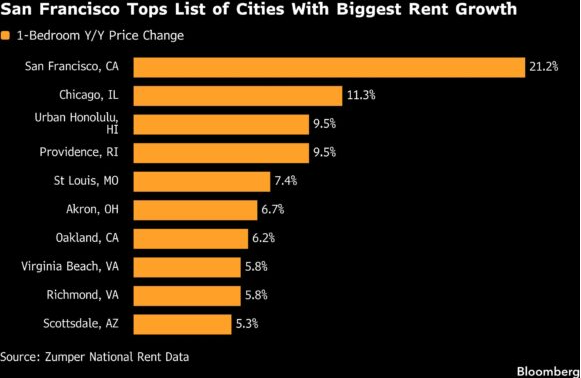
Per GO Destination Services, “Competition for desirable rental properties has intensified. In many cases, landlords or property managers will shortlist a small group of qualified applicants and select from the strongest candidates. This competitive environment can result in effective bidding situations, with properties frequently leasing 8–12% above the advertised asking rent. The competitive nature of the San Francisco rental market has also led to an increase in online rental scams. ”
Netherlands
- As of May 22, 2026, EU rules (Directive 2024/1233) have changed how Dutch residence and work permits are handled. These changes affect many common permit categories such as paid employment, highly skilled migrants, EU Blue Card holders, researchers, work experience and orientation year graduates. More info from Newland Chase here.
- Effective April 3rd, 2026, accompanying family members of highly skilled migrants may remain outside the Netherlands for up to eight months where the main permit holder is abroad for work. Previously, this flexibility applied only to the highly skilled migrant, not their dependents. The main general residence rules still apply, and absences exceeding four consecutive months in a third consecutive year may still lead the IND to assess where the main residence is maintained. However, this amendment provides greater clarity and reduces the risk of family members losing residency due to temporary assignments abroad.
Ireland
- The Irish Department of Justice, Home Affairs and Migration has announced an important change to the short stay (Type C) visa process that will impact applicants and employers alike. From June 1, 2026, the right of appeal for certain short stay (Type C) visa refusals will be removed. Applicants whose short stay visa is refused will no longer be able to submit an appeal. This applies to visit visas, business travel visas and short-term event or family visit visas.
Switzerland
- Switzerland is introducing new measures to improve labor market access for both beneficiaries of protection status S and internationally trained talent. On May 27, 2026, the Federal Council adopted proposed amendments to the Federal Act on Foreign Nationals and Integration to strengthen workforce integration and help address labor shortages.
Sweden
- Starting June 1, 2026, new rules for work permits will apply in Sweden. One of the changes is a new salary requirement stipulating that, in order to obtain a work permit, the salary must amount to at least 90 percent of the median salary in Sweden at the time of application. The government has decided that certain occupational groups will not be subject to the salary requirement.
Portugal
Portugal continues to experience labor unrest related to proposed labor reforms. Recent nationwide strikes caused significant disruptions to metro systems, rail services, airlines, schools, and healthcare facilities. Additional strike actions are expected as parliamentary debate continues later this month. Potential Impacts: Flight cancellations and transportation delays, reduced rail and public transit services, increased travel times for relocating employees and business travelers, and potential disruptions to destination services and move-related appointments.
New Zealand
- Employers recruiting foreign nationals into skill level 3 occupations should prepare for the expanded English language requirement, as it may affect recruitment timelines and candidate eligibility. Effective June 1, 2026, applicants for an Accredited Employer Work Visa (AEWV) and New Zealand Standard Classification of Occupations (ANZSCO) or National Occupation List (NOL) skill level 3 roles must meet minimum English language requirements, with limited exceptions.
South Korea
- On May 31, 2026, the Ministry of Justice and the Ministry of Science and ICT announced the expansion of the scope of the Top-Tier Visa from June to cover professors and researchers in science and technology. The visa had previously been limited to staff at companies in eight high-tech industries, such as semiconductors and artificial intelligence.
Philippines
A magnitude 7.8 earthquake struck near Mindanao on June 8, causing fatalities, infrastructure damage, power outages, port disruptions, and flight cancellations. More than 130 aftershocks have been recorded. Damage assessments and recovery operations remain ongoing. Potential Impacts: Flight disruptions at General Santos International Airport, delivery delays for household goods and logistics shipments in affected areas, temporary interruptions to destination services and local transportation, and possible delays due to damaged roads, utilities, and port infrastructure.
Vietnam
- Update June 1, 2026: The government will expand the health declaration requirement for travelers entering, departing from, or transiting through Vietnam, effective July 1, 2026. Under the new regulations, travelers must complete a health declaration within seven days prior to their entry, departure or transit. The Ministry of Health will determine the scope and duration of implementation for certain infectious diseases, based on global disease trends and the risk of importation into Vietnam.
- Also, as of June 1, 2026, a significant and immediate change has taken place in Vietnam’s digital administrative system. Enterprises, representative offices, and other registered organizations must now use Business VNeID (VNeID for Enterprises and Organizations) to access government online portals. The previous login method using a company e-signature or token has been discontinued without a transition period.
Middle East Region
- The area remains volatile. Airline schedule changes and airspace restrictions remain possible. There continues to be risk of travel disruptions across Israel, Lebanon, UAE, Qatar, Bahrain, Kuwait, Saudi Arabia, and Jordan. As for relocation processes, there is continued uncertainty for household goods, personal effects, and commercial shipments moving through Gulf gateways. There remains potential delays to relocation activities and destination services throughout the region.
For anyone that enjoys cool tools and websites, try this one:
- Travel: This tool tells you where you can go with your passport. It also provides a travel planner and a Schengen Area calculator.
And lastly, hopefully this has not been something you (or your remote employee) have had to deal with, but here's “What to do when immigration authorities visit a remote employee’s home”! Our friends from BAL share their insights with HR Dive on critical things to know and be prepared for in these situations.

/Passle/56686a093d94740bd0dda608/SearchServiceImages/2026-09-11-12-43-14-097-6aa3f7624a3804d2c5d87e56.jpg)
/Passle/56686a093d94740bd0dda608/SearchServiceImages/2026-08-25-19-31-26-587-6a8ded8e7d0bbb1cefecaf47.jpg)
/Passle/56686a093d94740bd0dda608/SearchServiceImages/2026-08-17-14-51-44-833-6a832000113f582fe660a2e7.jpg)