


A few years ago I wrote about Time Out's annual ranking of the world's coolest neighborhoods and admitted that I'm famous for arriving somewhere new, looking around, and saying, "I could live here!" Well, the 2026 list is out, and I've been saying it all over again.
This year, Time Out's global network of local experts nominated neighborhoods, and a panel of editors then scored each one on food and drink, nightlife, unique local businesses, livability, and community. The editors also note an interesting shift. During the pandemic years, our immediate neighborhoods became our whole world. Now the balance is returning. Local neighborhoods still matter enormously, but city centers are having a renaissance too, with new venues and cafés serving hybrid workers and the back-to-the-office crowd.
Why this matters for global mobility
After more than 25 years in this business, here's what I know: a job offer brings someone to a city, but the neighborhood decides whether they're happy there. And it's rarely just one person making that move. When an assignment or relocation falls apart, the cause is almost never the job itself. More often than not, it's the family. A partner who put their own career on hold and feels isolated, or kids who can't find their footing at a new school. It can also be a household that never found its coffee shop, its market, or its people.
The employee may go to the office each day, surrounded by colleagues and a built-in routine. Their partner and children don't have that. Their whole experience of the new location is the neighborhood: the walk to school, the park on the weekend, the neighbors they meet, and whether there's anyone nearby who speaks their language or shares their interests. If the family is unhappy, the employee will be too, and that's when early returns, declined extensions, and lost talent happen.
That's why Time Out's criteria are so relevant to us. Livability and community are exactly what our destination consultants focus on during area orientation tours every day. They don't just ask what works for the employee. They ask what works for everyone moving.
A few themes from this year's list stood out to me.
Neighborhoods in transition. Many of the top picks are former industrial or overlooked areas that creatives reclaimed because rents were low. Examples include Osaka's old shipbuilding district, Stockholm's former meatpacking area, Bangkok's port-turned-auto-parts quarter, and Glasgow's Govanhill. For mobility programs, this is a reminder that housing markets move quickly. Today's up-and-coming pocket can become tomorrow's premium address. Infrastructure matters too: Lisbon's São Bento, for example, is expecting new metro stations in early 2027. Local, current expertise in home finding is essential.
Diversity as a draw. Rome's Esquilino, Athens' Neos Kosmos, Delhi's Humayunpur, and Govanhill were all celebrated for their multicultural communities. For an international assignee, a neighborhood where many cultures already live side by side can make the landing much softer.
Cool isn't the same as right-fit. Stockholm's Slakthusområdet is now called the city's nightlife capital, which is great for a young single professional. A family with school-age kids may need something different. The best relocation support helps each person find their version of "I could live here."
Where destination services come in
A list like Time Out's is a great starting point, but no ranking can tell an individual employee where they will thrive. That's the job of a skilled destination services consultant, and it's one of the most valuable investments a mobility program can make.
A good consultant starts with the person, not the property. Before any tours, they learn about the household. They ask about commute tolerance, budget, school needs, pets, hobbies, faith communities, and whether the family wants a quiet residential street or a lively block with restaurants below. Then they match those priorities to neighborhoods that fit. That's something no search engine or rental app can do well.
Local, current knowledge matters just as much. As this year's list shows, neighborhoods change quickly. A consultant who lives in the market knows which areas are rising, where new transit lines are coming, which blocks are loud on weekends, and where rents are climbing. They also understand local rental practices that can surprise newcomers, such as deposits, agent fees, lease terms, and what documentation landlords expect from a foreign national with no local credit history.
An area orientation tour lets the employee experience a neighborhood before committing to it. Walking the streets, testing the commute, visiting the grocery store, and seeing the local schools firsthand turn an abstract list of options into a confident decision. For families, school search support is often the single biggest factor in choosing where to live.
And the support doesn't stop when the lease is signed. Settling-in services help people get connected. That includes registering with local authorities, setting up utilities and banking, getting a phone plan, and learning the practical rhythms of daily life. These small wins help someone feel at home rather than like a visitor.
For employers, the payoff is real. Employees who land in the right neighborhood settle faster, spend less time in costly temporary housing, and get up to speed in their new roles sooner. Just as important, they're more likely to stay. Accompanying partners and families who feel connected to their community are a big part of what makes a relocation or assignment succeed.
In other words, Time Out can tell you where the cool neighborhoods are. A great destination services partner helps your people find the one that's right for them.
Here are the Top 20 Coolest Neighborhoods in the World for 2026:
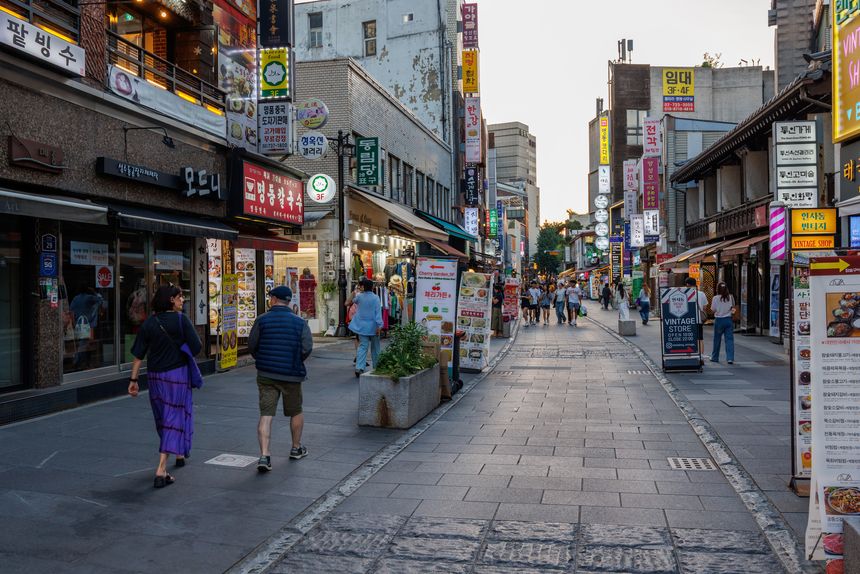
1. Jongno 3-ga: Seoul (South Korea)
2. L'Ocean District: Rabat (Morocco)
3. Neos Kosmos: Athens (Greece)
4. Chinatown: Los Angeles (United States)
5. Govanhill: Glasgow (Scotland, UK)
6. Kitakagaya: Osaka (Japan)
7. Chapinero Alto: Bogotá (Colombia)
8. Koenji: Tokyo (Japan)
9. Downtown: St. Catharines (Canada)
10. Esquilino: Rome (Italy)
11. Russafa: Valencia (Spain)
12. Tân Định: Ho Chi Minh City (Vietnam)
13. São Bento: Lisbon (Portugal)
14. Talat Noi: Bangkok (Thailand)
15. Slakthusområdet: Stockholm (Sweden)
16. Humayunpur: Delhi (India)
17. Laranjeiras: Rio de Janeiro (Brazil)
18. West Town: Chicago (United States)
19. Rákóczi tér: Budapest (Hungary)
20. Jalan Besar: Singapore (Singapore)
You can see the full list of 40 neighborhoods here. As before, each entry includes a neighborhood overview, a "perfect day" itinerary, and tips for planning your visit. It's a fun read whether you're planning a trip, an assignment, or just daydreaming. And yes, I said "I could live there!" more than a few times reading through it.
/Passle/56686a093d94740bd0dda608/SearchServiceImages/2026-10-05-19-37-55-698-6ac3fc939419104bcb84c3ed.jpg)
/Passle/56686a093d94740bd0dda608/SearchServiceImages/2026-09-01-12-52-55-677-6a96caa7f9386af8ea6f23d9.jpg)
/Passle/56686a093d94740bd0dda608/SearchServiceImages/2026-09-28-14-42-00-956-6aba7cb89a7b7dedf3b5c60c.jpg)