Welcome to our latest bi-weekly review of events, issues and activities impacting global mobility programs around the world. As always, there’s plenty for HR, mobility and travel teams to stay on top of!
Per our friends at Bournes on the state of household goods shipping:
- Middle East disruption remains the single biggest factor. Interim ceasefires and diplomatic talks are periodically stabilizing routes through the Strait of Hormuz, but shipping lines are still suspending bookings and diverting vessels, so there is no reliable relief yet.
- Cost certainty is the practical headache. Short-notice surcharges, currency adjustments and periodic fuel (bunker) reviews mean the figure quoted and the figure at sailing can differ.
- Moves to Asia, Oceania, India and the Middle East still route around the Cape of Good Hope, with longer transit times the norm. A first tentative sign of a return to the Suez Canal has appeared, with one carrier group moving a few services back, though it is limited and could be reversed.
- Moves to North America face tight vessel capacity and a real risk of containers being rolled or cancelled following carrier alliance changes.
- Longer-standing conditions continue unchanged: lithium-ion battery restrictions, ICS2 information requirements, the ONE Line restriction on the effects of Russian passport holders, and reduced container equipment quality.
Now let's look at specific locations around the world:
United States
- U.S. Customs and Border Protection (CBP) has announced that the Kingdom of Saudi Arabia is now an official partner in the Global Entry program, expanding trusted traveler benefits to eligible Saudi citizens and strengthening travel and security cooperation between the two countries.
- WR Immigration Partners David Fullmer and Naveen Rahman Bhora discuss the proposed $70,000 fee tied to Optional Practical Training (OPT), along with an additional $30,000 fee for subsequent OPT recommendations. They explore who may bear these costs, how the proposal could affect current and future OPT participants, and the implications for international students, universities, and employers. The discussion also covers employer recruitment strategies, potential cost-sharing arrangements, and practical steps for HR and Global Mobility teams to prepare for possible changes.
- A Department of Labor proposal to revise the PERM labor certification program has cleared White House review. Planned changes concern recruitment standards, protections for US workers affected by layoffs, non-discrimination requirements and record retention. Current rules still apply. The proposal must go through publication, public consultation and finalization before changes take effect. Employers should monitor developments that could affect green card sponsorship processes and costs.
- Separately from the proposed reforms, authorities have suspended PERM processing for certain organizations while investigating their use of immigration programs. This is not a nationwide suspension. Employers should ensure that recruitment, pay and work-location records accurately support immigration filings, particularly following layoffs or changes to working arrangements. Affected organizations may face delays to employees’ green card applications.
- Wondering what the mid-term elections could mean for U.S. immigration policy? Envoy Global says the most immediate impact will likely be more congressional oversight, not new law. Any major immigration legislation would face the Senate filibuster and a possible veto, though targeted employment-based measures could win bipartisan support. The executive branch will keep driving immigration policy, so employers should continue filing on time and planning under current law.
Mexico
- Mexico’s National Immigration Institute released an updated list of immigration services that applicants may schedule through its online appointment system. Effective Oct. 30, 2026, applicants may schedule appointments online for the following immigration services:
- Employment-based and family-based visa authorizations
- Obtaining or updating an Employer Registration Certificate (CIE)
- Family-based regularization of immigration status
- Regularization of immigration status due to an expired document or unauthorized activities
Canada
- Express Entry invitation rounds are paused from 3 November for up to two weeks while candidate scores are recalculated. The revised system awards up to 100 points for qualifying job offers in high-wage occupations, without requiring an LMIA for those points. Eligible Canadian work experience can also attract additional points. Employees awaiting permanent residence invitations may experience a short delay. Employers should review whether qualifying offers could strengthen their employees’ profiles. These changes do not remove LMIA requirements generally for work permits.
- An immigration levels update is expected alongside the federal budget scheduled for 5 November. Employers preparing 2027 hiring and relocation budgets should review the published measures before making assumptions about future allocations or eligibility.
Brazil
- Brazil has introduced a dedicated residence pathway for foreign nationals traveling to Brazil to help prepare, organize, plan or carry out qualifying megaevents. It covers foreign nationals taking up local employment in Brazil and those providing qualifying technical assistance.
United Kingdom
- The UK government has published its response to the Earned Settlement consultation, confirming a new 10-year standard pathway to settlement, up from the current five-year pathway. Certain individuals will be able to settle quicker than 10 years, including higher earners, qualifying exceptional-talent applicants and certain public-sector health and education workers. The government’s response to the consultation sets out what will now be implemented via a Statement of Changes, expected to be issued later this year. For employers, this could mean additional visa extensions, higher sponsorship costs and changes to workforce budgets. For employees, it creates uncertainty around plans for their careers, homes and families.
Ireland
- Irish authorities have taken Ireland’s Employment Permits Portal offline after identifying suspicious unauthorized activity. It was taken offline following a suspected personal data security incident and unauthorized activity. The portal was scheduled to test or reopen around November 3, 2026, pending security checks, though full restoration is subject to ongoing investigations.
UAE
- Per AIRINC's recent update on expatriate housing, The UAE is one of the few surveyed markets showing an overall downward rental trend. Lower-end apartments are holding up better than higher-end units. Higher-end rents are declining more quickly. Dubai has shifted more clearly in favor of tenants due to increased supply, softer demand, and economic uncertainty. To add details for Dubai, Arabian Business shares that New Property Finder figures show advertised apartment rents dropped by almost 22% in Downtown Dubai, 16% in Dubai Marina and 12.5% in Business Bay between Q3 2025 and Q3 2026. Nine of the ten apartment communities studied recorded declines, while apartment listings increased 55% year on year in September. Renters and employers now have more choice and negotiating leverage. Abu Dhabi remains more resilient. The June rent freeze has provided greater cost certainty for many mainland tenants. Prime island, waterfront, and Abu Dhabi Global Market properties remain more competitive.
Australia
- Per AIRINC's recent update on expatriate housing, Perth’s expatriate rental market continues to rise. Demand remains high despite some improvement in housing supply. Low vacancy levels continue to support elevated rents. Rental growth is expected to moderate as more supply enters the market, although population growth and demand are likely to keep conditions competitive. Melbourne, Sydney, and Brisbane also recorded increases, although these were more moderate.
Vietnam
- Vietnam is easing work permit rules to attract global talent, but employers still need to navigate eligibility checks and compliance requirements. Vietnam’s competition for foreign talent is entering a new phase. On October 20, 2026, the government issued Decree No. 393/2026/ND-CP, establishing a consolidated framework for foreign workers and exempting 18 categories of individuals from the work-permit requirement. The decree takes effect on December 5. Get more details here.
Philippines
- The Philippines’ Department of Labor and Employment (DOLE) issued new rules simplifying the Alien Employment Permit (AEP) application process, including reduced document requirements and shorter processing times. There will be fewer required supporting documents for AEP filings, simplified Labor Market Test publication requirements for employers, and a shorter AEP processing period.
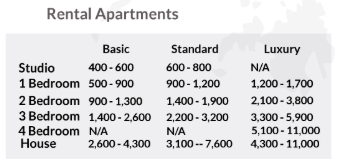
Quick rental housing update for Manila: Most expats choose to live in traditional expat locations of Bonifacio Global Makati (BGC) which is home to many MNC, and Makati. As these 2 locations demand the highest rents, some people have started to explore alternative neighborhoods where landlords may be a bit more flexible and rents a bit lower. Supply of 4 bedroom condos remains extremely limited. Here are average monthly rents in USD courtesy of Relo Network Asia:
Singapore
- From 29 November, the updated process with work permits requires affected workers to hold an issued Work Permit or a Temporary Permit letter before starting work. Employers should not assume that in-principle approval alone permits a new arrival to begin working. For non-Malaysian workers, the guidance identifies applications and appeals submitted from 29 November as the relevant cohort. Review onboarding checks and coordinate permit issuance with planned start dates.
South Korea
The cost of living in Seoul has risen sharply, driven by surging housing prices, higher monthly rents, and increased utility and baseline costs. Add that the currency dynamics in Seoul have experienced a major reversal over the last three months where the Won's strengthening acts as an immediate pay cut for expatriates. AIRINC shares a number of locations 3-month exchange rate fluctuations of more than 5% and South Korea was:

China
- China announced that the maximum period of stay for eligible APEC Business Travel Card (ABTC) holders will increase from 60 days to 90 days, effective Nov. 1, 2026. Eligible ABTC holders may now remain in China for up to 90 days per entry, an increase from the previous 60-day maximum.

Lastly, to wrap things up, wrap your head around the cost of an auto across the world. For someone moving on a permanent international transfer, particularly when relocating out of a region to another region (like EMEA to APAC or APAC to the Americas) as auto shipments are often not able to occur or not covered, when an employee has to buy their own new car, take a look at vehicle prices in this “Where a new car is most expensive” from Voronoi that used the latest data from Deutsche Bank and Numbeo to visualize the cost of buying a new car across 30 major cities. Prices are based on a Volkswagen Golf 1.5 or an equivalent new car. Most expensive city by far? Singapore! One interesting realization is that San Francisco ranks 47th out of 69 cities for new car prices in 2026, with an average price of $21,333. For a city known for its high cost of living, the relatively low price of a new car is a striking contrast. The difference is particularly pronounced between San Francisco and New York. At $14,067, the gap means a buyer in San Francisco pays roughly 40% less for a comparable car than a buyer in New York.