


One of the more common responses we’ve heard since the U.S.-Iran conflict began on February 28: “We don’t have anyone in the Middle East, so we’re watching from the sidelines.”
That’s understandable, but you might want to consider potential impacts to your mobility program, even if you do no international cross-border moves and assignments into the Middle East.
This is the second in a three-part series on how the conflict is reshaping talent mobility. This post is for every program — not just those with Middle East exposure. Because the disruption to aviation costs, container shipping, and raw material supply chains is already working its way into relocation budgets that have nothing to do with the region where the bombs are falling.
Aviation surcharges, household goods delays, and destination cost pressures are already present — whether or not your program has a single Middle East posting.
The Aviation Cost Shock Is Global
Jet fuel costs have roughly doubled for some carriers since the conflict began. That is not a surcharge that airlines can absorb quietly — jet fuel is the second-largest operating expense in the industry, after labor. The cost is being passed through in the form of surcharges and fare increases, and it applies to any international route that either touches the conflict zone or must now reroute around it.
That’s most of them.
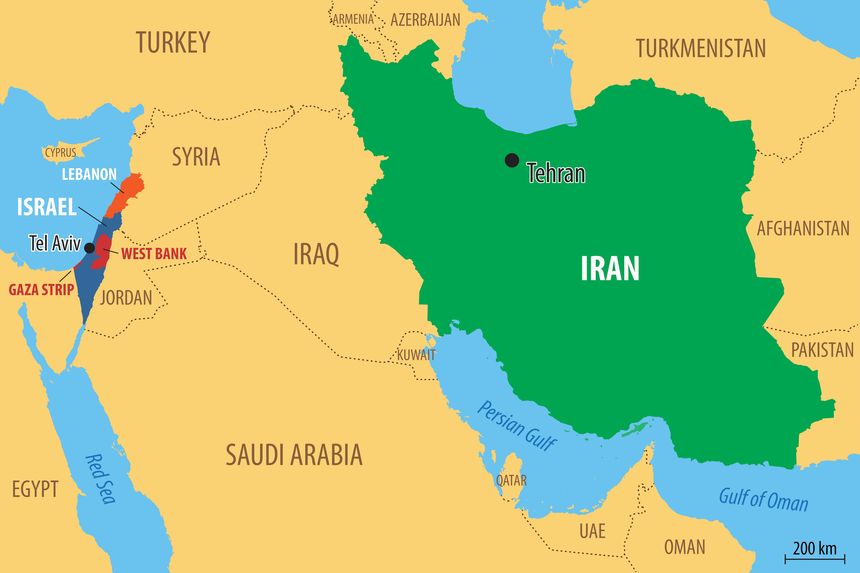
Closed airspace over Iran, Iraq, Israel, Jordan, Qatar, and Kuwait has forced widespread rerouting across the Asia-Europe corridor — adding 30 to 90 minutes to long-haul flights and increasing fuel burn on every leg. Any international assignment that involves air travel is now more expensive. Premium cabin costs for key talent moves are particularly exposed.
There’s a structural wrinkle worth noting for U.S.-based programs: American carriers largely abandoned fuel hedging programs about a decade ago, while European and Asian airlines maintain active hedging strategies. That means U.S. carriers are absorbing the full price shock in real time, without the buffer their international competitors have. If the conflict prolongs, American airlines may be forced to surcharge more aggressively than their rivals on the same routes.
Move schedules that were built around reliable hub connections through Doha, Dubai, or Abu Dhabi should be reassessed. Even as those hubs partially reopen, their reliability as connection points is diminished for the foreseeable future.
Household Goods: Longer Transits, Higher Costs
Global container shipping has been severely disrupted. The major carriers — Maersk, MSC, CMA CGM, Hapag-Lloyd, COSCO — have suspended or restricted bookings through the Persian Gulf. Ships are being rerouted around the Cape of Good Hope, adding 10 to 14 days to transit times and approximately $1 million in additional fuel cost per vessel.
The knock-on effects are already appearing: port congestion at alternative hubs, equipment shortages as containers pile up in the wrong locations, and cascading delays across trade lanes that have nothing to do with the Middle East. Emergency freight surcharges and formal conflict surcharges have been added to carrier pricing. Our household goods partner reports that more than 37,000 flights have been cancelled since the war started, compounding ocean freight disruption with air freight delays.
For assignees expecting household goods shipments through any Gulf routing, timelines need to be reset and communication needs to be proactive. Delays that feel like carrier failures are actually the consequence of a geopolitical event that has rerouted the global supply chain.
The Cost of Everything at Destination
The disruption extends well beyond oil and shipping. The Gulf region supplies roughly 8% of global aluminum. Gulf smelters have declared force majeure and halted Hormuz shipments; London Metal Exchange prices have spiked sharply in response. South Korean semiconductor manufacturers have flagged a potential helium shortage — Middle Eastern helium has no viable substitute in chip fabrication. Fertilizer exports from the region are disrupted, pushing agricultural input costs higher.
Mobility managers sometimes treat raw material prices as background economics — interesting but not directly relevant. In this case they are relevant. Higher aluminum prices flow into construction and housing costs at destination. Semiconductor supply constraints push electronics prices up. Fertilizer disruptions drive food costs higher. These are the inputs that shape the cost-of-living indices that COLA calculations depend on, and they are moving in the wrong direction simultaneously.
The “Poly-National” Acceleration
Some companies were already moving toward more geographically distributed corporate structures before this conflict — what analysts have called the rise of the “poly-national” company, with regional operations compartmentalized by country rather than concentrated in hub cities. The Iran conflict is accelerating that conversation.
Mobility programs should anticipate increasing requests to relocate key leadership out of concentrated Gulf hubs and into more distributed footprints. That is a different kind of assignment workload than routine rotational moves — it frequently involves more complex policy design, more exception handling, and more senior stakeholder engagement.
The Bottom Line
You don’t need a Middle East posting on your roster for this conflict to affect your program. Aviation surcharges, household goods delays, and destination cost-of-living pressure are already present — and will deepen if the disruption continues.
This is the second in a three-part series. Part Three examines the downstream costs arriving inside U.S. domestic relocation programs — including fuel surcharges on household goods moves, mortgage rate pressure, and what a stagflation scenario means for program budgets.
Let us know if you would like our most recent “Service Alert - Middle East Conflict”.
/Passle/56686a093d94740bd0dda608/SearchServiceImages/2026-09-16-15-33-47-331-6aaab6dbf276fb0829688bc3.jpg)
/Passle/56686a093d94740bd0dda608/SearchServiceImages/2026-10-13-17-20-19-458-6ace6853ba4fc866bfdbb6e6.jpg)
/Passle/56686a093d94740bd0dda608/SearchServiceImages/2026-04-09-20-33-01-847-69d80cfda2453629156ee342.jpg)